Complete Wavetable Format Guide for Beginners
Complete Wavetable Format Guide for Beginners
In this article, I’ll provide a detailed explanation of the various Wavetable formats I release, making it easy to understand even for those new to digital audio.
After reading this article, you’ll be able to choose the optimal Wavetable format for your synthesizers and DAW.
What is Wavetable Synthesis? A Gentle Introduction to Basic Concepts
Basic Principles of Wavetable

Wavetable synthesis is a sample-based synthesis method that uses a “Wavetable” - a dataset containing various waveforms.
Simply put:
- Multiple waveforms are stored in a single file
- These waveforms are smoothly switched over time
- Complex timbres that change dynamically are generated
Differences from Traditional Synthesis
| Synthesis Method | Characteristics | Sound Changes |
|---|---|---|
| Subtractive Synthesis | Basic waveforms processed with filters | Static |
| FM Synthesis | Timbral changes through frequency modulation | Dynamic but complex |
| Wavetable Synthesis | Switching between pre-made waveforms | Intuitive and dynamic |
Understanding Wavetable Format Structure
1. Sample Length
The number of samples per frame in a Wavetable.
Common sample lengths:
• 2048 samples (most common)
• 1024 samples
• 512 samples
• 256 samples
• 128 samples
[image: img/blog/Comparison of waveform appearance with different sample lengths]
2. Number of Frames
The number of waveforms stored within a Wavetable.
Typical frame counts:
• 1-256 frames
3. Sampling Rate
Sampling rate refers to the number of samples acquired per second.
Wavetables are handled differently from standard audio material such as loops or one-shot samples. For wavetable WAV files, the sample rate (44.1 kHz, 48 kHz, etc.) is not fundamentally important.
In conventional audio files, the sample rate directly affects playback pitch and sound quality. In contrast, wavetables are not treated as time-based audio, but as a collection of single-cycle waveforms (frames).
Because of this, most wavetable-compatible synthesizers behave as follows:
-
WAV files with sample rates of 44.1 kHz or 48 kHz are equally acceptable
-
What matters is the number of samples per frame (e.g. 2048 samples) and whether the frame structure matches the synthesizer’s requirements
-
Any sample-rate differences are typically ignored or automatically compensated for during import
In other words, as long as the wavetable is properly constructed, it can be imported correctly regardless of the sample rate, provided the frame length is compatible.
Detailed Explanation of Each Wavetable Format
2048 samples-44.1kHz-32bit-Wav [Original]
Specifications:
• Sample length: 2048 samples
• Sampling rate: 44.1 kHz
• Bit depth: 32-bit float
• Compatible devices: Universal (highest compatibility)
Features:
- Industry standard format
- High quality (32-bit float)
- Usable with virtually all Wavetable-compatible synthesizers
Recommended uses:
- Software synthesizers like Serum, Vital, etc.
2048 samples-44.1kHz-32bit-Wav [256 frames] Wavetables for Phase Plant
Specifications:
• Sample length: 2048 samples
• Frame count: 256 frames
• Sampling rate: 44.1 kHz
• Bit depth: 32-bit float
• Dedicated support: Phase Plant
Wavetables for Phase Plant exclusive features:
- For wavetables with fewer than 256 frames, spectral morphing is used to expand them to 256 frames.
1024 samples-44.1kHz-32bit-Wav Wavetables for Ableton Wavetable
Specifications:
• Sample length: 1024 samples
• Sampling rate: 44.1 kHz
• Bit depth: 32bit
• Dedicated support: Ableton Live Wavetable
512 samples-44.1kHz-16bit-Wav
Specifications:
• Sample length: 512 samples
• Sampling rate: 44.1 kHz
• Bit depth: 16-bit
256 samples-44.1kHz-16bit-Wav
Specifications:
• Sample length: 256 samples
• Sampling rate: 44.1 kHz
• Bit depth: 16-bit
128 samples-44.1kHz-16bit-Wav
Specifications:
• Sample length: 128 samples
• Sampling rate: 44.1 kHz
• Bit depth: 16-bit
• Compatible devices: retro hardware
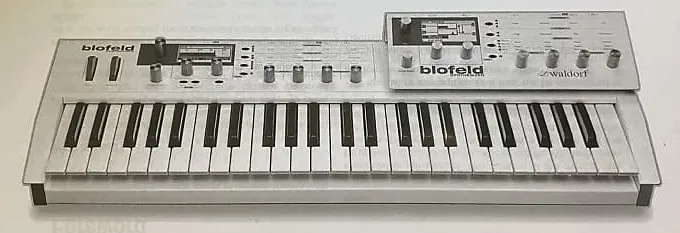
128 samples-44.1kHz-16bit-Wav for Waldorf Blofeld
Specifications:
• Sample length: 128 samples
• Frame count: 64 frames
• Sampling rate: 44.1 kHz
• Bit depth: 16-bit
• Dedicated support: Waldorf Blofeld and similers
Blofeld-specific adjustments:
- Reduced the frame count to 64 frames using spectral morphing
Summary - Choose the Best Wavetable Format for You
Choosing a Wavetable format depends on the equipment you use and your music production style.
Simple selection guide:
Mainly software synths ↁE2048samples-32bit
Using Ableton Live ↁE1024samples-32bit
Hardware focus ↁE512/256/128samples-16bit
Waldorf Blofeld ↁE128samples-16bit-64frames